

Business Operation · 2025
In this section22 topics
- Corporate Information4 items
- Dividend Policy2 items
- Major Shareholders2 items
- Business Strategies Overview6 items
- Material Changes & Developments2 items
- Use of Proceeds from Securities Offerings1 item
- Commitments Made in the Registration Statement1 item
- Group Operating-Structure Policy1 item
- Companies Where the Company Holds ≥10%1 item
- Shareholders with Potential Conflict of Interest1 item
- Relationships Among Major Shareholders1 item
- Shareholders' Agreement1 item
- Shareholding Diagram (Group Structure)3 items
- Income Structure3 items
- Product / Service Characteristics2 items
- Research & Development2 items
- Assets Used in the Business4 items
- Marketing Policy & Competition3 items
- Procurement of Products & Services7 items
- Projects Under Construction1 item
- Debentures & Bills of Exchange1 item
- Convertible Securities1 item
Corporate Information
Company Name
THAI VEGETABLE OIL PUBLIC COMPANY LIMITED
Telephone
0-2477-9020
Website
www.tvothai.com
info@tvothai.com
Dividend Policy
Dividend Policy
The dividend policy is not less than 60% of net profit after income tax deduction if there is no necessary reason not to do so. The Company shall propose to the Annual General Meeting of Shareholders to consider and approve. The annual dividend payment which will depend on the investment plan, necessity and other appropriateness as the Board of Directors deems appropriate. For the year 2025, the Board of Directors resolved to propose to the Annual General Meeting of Shareholders on April 24, 2026 to approve the annual dividend payment at the rate of Baht 1.97 per share or equivalent to 80% of net profit after income tax deduction.
In 2025, the Board of Directors approved the annual dividend payment at a rate of Baht 1.97 per share, totaling Baht 1,752.26 million, representing 80% of the Company's net profit for the year. The dividend is distributed from the Company's net profit.
The Company previously paid an interim dividend for the first six months of 2025 to shareholders on September 5, 2025, in cash at a rate of Baht 0.80 per share, accounting for 60% of the net profit for the first half of the year. The remaining dividend payment of Baht 1.17 per share is subject to approval by the 2026 Annual General Meeting of Shareholders (for more details, please refer to the resolutions of the Shareholders' Meeting at https://www.tvothai.com/en/investor/shareholders-meeting).
Historical Dividend Payments
| This Year | Last Year | 2 Years Ago | Metric | Description |
|---|---|---|---|---|
| 2.46 | 2.36 | 0.82 | Net profit per share (Baht : Share) | Net profit per share (baht : share) |
| 1.17 | 0.93 | 0.65 | Dividend per share (Baht : Share) | Dividend per share (baht : share) |
| 0 | 0 | 0 | Dividend stock ratio (Number of original shares: dividend shares) | Ratio of stock dividend payment (existing share : stock dividend) |
| 0 | 0 | 0 | Dividend share value per share (Baht : Share) | Value of stock dividend per share (baht : share) |
| 1.97 | 1.73 | 0.81 | Total dividend payment value (Baht : Share) | Total dividend payment (baht : share) |
| 80 | 73 | 99 | Dividend payout ratio to net profit (%) | Dividend payout ratio compared to net profit (%) |
| 0.8 | 0.8 | 0.16 | Interim Dividend Payment |
Business Strategies Overview
Introduction
Vision:
Stepping into the food business and firmly maintains its leadership position in the vegetable oil and animal feed ingredients business.
Mission:
Strives to develop personal excellence and recruit technological and digital skilled personnel.
Improves production efficiency to increase competitiveness and raise the quality of products and services to meet the variety of customer’s demands.
Strives toward Food & Future Food business throughout the value chain, both existing businesses and new businesses.
Creates technology and innovation aligning with the sustainable operation of environmental, social, and governance (ESG) with the objective of reaffirming position as an industry leader who is concerned about the community, society, and environment.
Corporate values: (TVO Way)
T: Trust & Teamwork - Build confidence, develop the organization and team work to achieve business excellence
V: Value Creation - Create value for the Company in order to be a leadership in the vegetable oil and animal feed ingredients business
O: Operational Excellence - Increase efficiency by creating innovation in order to bring TVO forward and maintain the sustainable leadership
Chairman's Message
The year 2025 marked another period in which the Company navigated its operations amidst global economic volatility and fluctuations within the agricultural sector. Uncertainties in global trade, coupled with foreign exchange rate volatility, continued to impact the business decisions of operators at all levels. Nevertheless, the Company effectively realigned its operational strategies, prioritizing prudent cost management and expense control to adapt to the evolving landscape. These measures have allowed us to continuously enhance our competitive edge.
Looking ahead, 2026 presents profound structural challenges within the industry. We are monitoring risks stemming from the new tariff agreement between Thailand and the United States, which may impact competitiveness in the domestic animal feed raw material market. Simultaneously, rapid technological advancements particularly the integration of Artificial Intelligence (AI) in risk management serve as both opportunities and challenges. The Company is prepared to adapt to these shifts prudently and proactively.
The Company remains committed to maintaining balanced growth across all dimensions, striving for robust financial performance alongside our sustainability mission. In 2025, the Company achieved a 5-star or “Excellent” Corporate Governance Report (CGR) rating for the 7th consecutive year. We were also recognized in the "Top Quartile" of listed companies with a market capitalization between Baht 10,001–30,000 million and within the Agro & Food Industry sector by the Thai Institute of Directors (IOD).
Furthermore, the Company received a perfect score of 100 in the AGM Checklist assessment for 2025, achieving the level of “Exemplary Level of Excellence” for the 5th consecutive year. The Company was also awarded a SET ESG Ratings of AAA by the Stock Exchange of Thailand and received the CSR-DIW Continuous Award 2025 from the Department of Industrial Works. In addition, the Company was selected as one of the ESG100 list for the 10th consecutive year and received the Sustainability Disclosure Award for the 5th consecutive year. The Company also successfully renewed its certification as a member of the Thai Private Sector Collective Action Against Corruption (CAC) for the 2nd consecutive term, covering the period 2025–2028. These recognitions are a source of pride for our entire team, reflecting our dedication to Corporate Governance, Social Responsibility, and Environmental stewardship to deliver long-term value to our shareholders.
On behalf of the Board of Directors, I would like to extend my deepest gratitude to all our valued stakeholders, shareholders, customers, business partners, financial institutions, private and public sector entities, the general public and the media for your continuous support, trust, and confidence in our Board and management team. I would also like to express my heartfelt gratitude to all employees for their dedications in driving our organization forward with strength and resilience. Our company remains committed to delivering sustainable and long-term value for our shareholders and society. We remain steadfast in our commitment to conducting business with responsibility and integrity, striving to deliver sustainable returns to our shareholders while creating lasting value for society in the years to come.
Dr. Suvit Maesincee
Chairman of the Board
Vision
Stepping into the food business and firmly maintains its leadership position in the vegetable oil and animal feed ingredients business.
Objectives
The Company is confident in the growth potential of the agriculture and food industry and has product development plan to continuously improve product quality. This will be achieved through modern technologies that meet international standards, focusing on resource efficiency and environmental sustainability. The Company aims to create innovations that add value to the business and reduce environmental impact. Additionally, it seeks to enhance the capabilities of employees at all levels to improve competitive advantage, while simultaneously caring for society and communities, and providing appropriate returns to shareholders, all with consideration for stakeholders across the board. This will contribute to sustainable growth, ensuring that the Company's operations align with its objectives and goals. To achieve these goals, the Company adjusts its strategies to remain aligned with changing circumstances and external factors. This includes comprehensive risk management and adequate internal controls in accordance with good corporate governance principles.
In 2025, the Board of Directors, together with the management team, reviewed the Company’s performance in light of the evolving global landscape, as well as the opportunities and challenges ahead. To ensure that the Company remains competitive and achieves sustainable growth, it is essential to continuously refine and align our strategies with the ever-changing business environment. Accordingly, the Company has established the following strategic directions:
1. Business Development and Elevation to maintain its leadership position and enhance competitive capabilities, the Company has established two key strategic directions as follows:
1.1) Enhance competitiveness by leveraging digital technologies to reduce costs, improve quality and operational efficiency, and modernize production processes through digital transformation and smart manufacturing. Simultaneously, strengthen data analytics capabilities through the use of AI to support strategic business decision-making.
1.2) Promote sustainable growth by focusing on continuous business expansion, both in existing operations through increasing production capacity of the vegetable oil extraction plant and in new ventures via mergers, acquisitions, and joint ventures in food-related businesses. Extend the existing value chain by establishing strategic partnerships at both domestic and international levels.
2. rganizational Transformation is essential to ensure the Company’s long-term and sustainable growth. This requires comprehensive organizational development and change, supported by several key enabling factors, including
2.1) People: We focus on enhancing employee capabilities through investment in training and upskilling to equip them for technological changes and evolving business environments. Additionally, we aim to foster employee engagement through various initiatives to strengthen their connection to the organization.
2.2) Technology: The Company will adopt intelligent technologies such as AI, automation systems, and, advanced research and innovation to enhance operational efficiency and strengthen competitive advantage.
By implementing these strategies, the Company is confident it will advance with resilience and stability, with the aim of sustainably creating value for shareholders, customers, partners, society and all stakeholders.
Goals
The Company is confident in the growth potential of the agriculture and food industry and has product development plan to continuously improve product quality. This will be achieved through modern technologies that meet international standards, focusing on resource efficiency and environmental sustainability. The Company aims to create innovations that add value to the business and reduce environmental impact. Additionally, it seeks to enhance the capabilities of employees at all levels to improve competitive advantage, while simultaneously caring for society and communities, and providing appropriate returns to shareholders, all with consideration for stakeholders across the board. This will contribute to sustainable growth, ensuring that the Company's operations align with its objectives and goals. To achieve these goals, the Company adjusts its strategies to remain aligned with changing circumstances and external factors. This includes comprehensive risk management and adequate internal controls in accordance with good corporate governance principles.
In 2025, the Board of Directors, together with the management team, reviewed the Company’s performance in light of the evolving global landscape, as well as the opportunities and challenges ahead. To ensure that the Company remains competitive and achieves sustainable growth, it is essential to continuously refine and align our strategies with the ever-changing business environment. Accordingly, the Company has established the following strategic directions:
1. Business Development and Elevation to maintain its leadership position and enhance competitive capabilities, the Company has established two key strategic directions as follows:
1.1) Enhance competitiveness by leveraging digital technologies to reduce costs, improve quality and operational efficiency, and modernize production processes through digital transformation and smart manufacturing. Simultaneously, strengthen data analytics capabilities through the use of AI to support strategic business decision-making.
1.2) Promote sustainable growth by focusing on continuous business expansion, both in existing operations through increasing production capacity of the vegetable oil extraction plant and in new ventures via mergers, acquisitions, and joint ventures in food-related businesses. Extend the existing value chain by establishing strategic partnerships at both domestic and international levels.
2. rganizational Transformation is essential to ensure the Company’s long-term and sustainable growth. This requires comprehensive organizational development and change, supported by several key enabling factors, including
2.1) People: We focus on enhancing employee capabilities through investment in training and upskilling to equip them for technological changes and evolving business environments. Additionally, we aim to foster employee engagement through various initiatives to strengthen their connection to the organization.
2.2) Technology: The Company will adopt intelligent technologies such as AI, automation systems, and, advanced research and innovation to enhance operational efficiency and strengthen competitive advantage.
By implementing these strategies, the Company is confident it will advance with resilience and stability, with the aim of sustainably creating value for shareholders, customers, partners, society and all stakeholders.
Business Strategies
The Company is confident in the growth potential of the agriculture and food industry and has product development plan to continuously improve product quality. This will be achieved through modern technologies that meet international standards, focusing on resource efficiency and environmental sustainability. The Company aims to create innovations that add value to the business and reduce environmental impact. Additionally, it seeks to enhance the capabilities of employees at all levels to improve competitive advantage, while simultaneously caring for society and communities, and providing appropriate returns to shareholders, all with consideration for stakeholders across the board. This will contribute to sustainable growth, ensuring that the Company's operations align with its objectives and goals. To achieve these goals, the Company adjusts its strategies to remain aligned with changing circumstances and external factors. This includes comprehensive risk management and adequate internal controls in accordance with good corporate governance principles.
In 2025, the Board of Directors, together with the management team, reviewed the Company’s performance in light of the evolving global landscape, as well as the opportunities and challenges ahead. To ensure that the Company remains competitive and achieves sustainable growth, it is essential to continuously refine and align our strategies with the ever-changing business environment. Accordingly, the Company has established the following strategic directions:
1. Business Development and Elevation to maintain its leadership position and enhance competitive capabilities, the Company has established two key strategic directions as follows:
1.1) Enhance competitiveness by leveraging digital technologies to reduce costs, improve quality and operational efficiency, and modernize production processes through digital transformation and smart manufacturing. Simultaneously, strengthen data analytics capabilities through the use of AI to support strategic business decision-making.
1.2) Promote sustainable growth by focusing on continuous business expansion, both in existing operations through increasing production capacity of the vegetable oil extraction plant and in new ventures via mergers, acquisitions, and joint ventures in food-related businesses. Extend the existing value chain by establishing strategic partnerships at both domestic and international levels.
2. rganizational Transformation is essential to ensure the Company’s long-term and sustainable growth. This requires comprehensive organizational development and change, supported by several key enabling factors, including
2.1) People: We focus on enhancing employee capabilities through investment in training and upskilling to equip them for technological changes and evolving business environments. Additionally, we aim to foster employee engagement through various initiatives to strengthen their connection to the organization.
2.2) Technology: The Company will adopt intelligent technologies such as AI, automation systems, and, advanced research and innovation to enhance operational efficiency and strengthen competitive advantage.
By implementing these strategies, the Company is confident it will advance with resilience and stability, with the aim of sustainably creating value for shareholders, customers, partners, society and all stakeholders.
Material Changes & Developments
Introduction
Enterprise control in the previous year.
Detail shows in Topic “Shareholder”
Nature of Business Operations in the past year.
The Company was established in 1967 under the name of Nakornchaisri Oil Industrial Company Limited, a manufacturer and distributor of rice bran oil. Then, in 1985, the Company was registered as Thai Vegetable Oil Company Limited to operate and produce cooking vegetable oil and animal feed ingredients and was listed in the Stock Exchange of Thailand on November 14, 1990 as a Thai Vegetable Oil Public Company Limited or TVO. From operating the business into the 59th years, the Company is committed to conduct business in accordance with the principles of corporate governance with regard to responsibility to all stakeholders to make the Company grow sustainably and maintain leadership in the vegetable oil industry as well as create appropriate returns for shareholders regularly.
In the year 2025, the Company continued to conduct business on an ESG basis, adhering to the principles of efficient cost management, transparency, and fairness to all groups of stakeholders in a sustainable manner. Therefore, one of the strategies of the business plan in the medium and long term is seeking and studying new business ventures, promoting innovation to satisfy the needs of customers and consumers.
Material Changes & Developments
| Year | Description |
|---|---|
| 1,967 | Established Nakornchaisri Oil Industrial Company Limited to produce rice bran oil with a capacity of 50 tons / day |
| 1,985 | Established Thai Vegetable Oil Company Limited with a production capacity of 400 tons of soybean / day |
| 1,990 | Acquired the assets of Nakornchaisri Oil Industrial Company Limited, expanding production capacity to 800 tons of soybean / day and listed on the Stock Exchange of Thailand |
| 1,992 | Held 14% of shares in Thai Edible Oil Co., Ltd., King Rice Bran Brand |
| 1,993 | Held 43% of shares in Prodigy Company Limited, PET bottle packaging manufacturer |
| 1,994 | Held 65% of shares in Thai Vegetable Oil International Company Limited |
| 1,997 | Expanded production capacity to 1,500 tons of soybean / day |
| 2,000 | Expanded production capacity to 2,000 tons of soybean / day |
| 2,001 | Expanded production capacity to 3,500 tons of soybean / day |
| 2,010 | Expanded production capacity to 6,000 tons of soybean / day and withdrew investment in Thai Vegetable Oil International Company Limited |
| 2,014 | Prodigy Public Company Limited has increased capital causing the Company's shareholding was adjusted to be 31.85% |
| 2,015 | Launched Healthy Chef and Queen products for the CLMV market |
| 2,017 | Exported soybean meal to other countries |
| 2,018 | Adjusted the production technology of Full Fat Soy / Innovation Project - Nano Neutralization |
| 2,019 |
|
| 2,020 | Launched new oil bottle design to be more comfortable for holding, opening and pouring |
| 2,022 | Revamped the 1-liter-bottle design of vegetable oil bottles, using fewer plastic pellets to make by 4 grams per bottle resulting in a saving of 350,000 kilograms per year and developing cardboard boxes used for packaging vegetable oil are now made from recycled paper. |
| 2,023 |
|
| 2,025 | After the completion of TVO1 factory improvement, the Company’s total production capacity increased to 7,000 tons of soybean / day |
| 2,024 | TVO1 factory improvement. |
Use of Proceeds from Securities Offerings
Is There Money Raised from a Securities Offering Still to Report On?
No
Commitments Made in the Registration Statement
Are There Commitments or Conditions from an Offering or Listing?
No
Group Operating-Structure Policy
Description
The subsidiary and its associated companies operate their business according to their management policy. Their management team adhere to the good governance principles. The Chief Executive Officer (Mr. Pachai Chanpitaksa) as a representative of the Company to be a committee of Prodigy Public Company Limited in order to participate in the determination of important management policies.
Companies Where the Company Holds ≥10%
Companies (≥10% Holding)
| Company Name | Address | Province | Zip Code | Telephone | Fax | Business Type | Security Type | Shares | Paid-up Shares |
|---|---|---|---|---|---|---|---|---|---|
| Prodigy Public Company Limited | 7/3 Soi Sukhaphiban, Bangkraboa Sub-District, Nakhonchaisi District | Nakorn Phathom | 73120 | (034) 332 611-2 | (034) 332 613 | Packaging Company | Common shares | 94,600,000 | 296,999,929 |
| Thai Edible Oil Company Limited | 3366/6-8 Soi Manorom, Rama 4 Road, Klongton, Klongtoey | Bangkok | 10100 | (02) 249 9351-2 | (02) 249 4914 | Manufacture and Distribution of Vegetable Oil | Common shares | 2,000,000 | 13,980,000 |
Income Structure
Product / Service Income
| Category | Description | This Year | This Year % | Last Year | Last Year % | 2 Years Ago | 2 Years Ago % |
|---|---|---|---|---|---|---|---|
| Total revenue from operations | Total revenue from operations | 27,793,372 | 100 | 30,596,305 | 100 | 34,194,613 | 100 |
| Soybean Oil | 11,207,125 | 40.32 | 10,643,887 | 34.79 | 10,178,165 | 29.77 | |
| Animal Feed Industry | 15,769,160 | 56.74 | 19,030,956 | 62.2 | 21,569,108 | 63.08 | |
| Packaging | 340,792 | 1.23 | 391,313 | 1.28 | 423,600 | 1.24 | |
| Other | Other | 476,295 | 1.71 | 530,149 | 1.73 | 2,023,740 | 5.92 |
Export Income
| Category | Description | This Year | This Year % | Last Year | Last Year % | 2 Years Ago | 2 Years Ago % |
|---|---|---|---|---|---|---|---|
| Total revenue | Total revenue from operations | 27,793,372 | 100 | 30,596,305 | 100 | 34,194,613 | 100 |
| Domestic | Domestic | 24,206,638 | 87.1 | 25,757,312 | 84.18 | 27,885,428 | 81.55 |
| International | International | 3,586,734 | 12.9 | 4,838,993 | 15.82 | 6,309,185 | 18.45 |
| Philippines | Philippines | 425,928.36 | 11.88 | 671,160 | 13.87 | 765,352.97 | 12.13 |
| Laos | Laos | 537,551.73 | 14.99 | 651,058.16 | 13.45 | 750,305.55 | 11.89 |
| Other countries | Other countries | 2,623,253.91 | 73.14 | 3,516,774.84 | 72.68 | 4,793,526.48 | 75.98 |
Other Income
| Operating Other Income | Non-Operating Other Income | Share of Profit |
|---|---|---|
| 1710 · As of year: 217833.2 · Description: Total other income · As of yesteryear: 252022.0 · As of year before yesteryear: 344543.0 · 1711 · As of year: 119174.15 · Description: Other income from operations · As of yesteryear: 163821.0 · As of year before yesteryear: 299006.0 | 1712 · As of year: 98659.05 · Description: Other income not from operations · As of yesteryear: 88201.0 · As of year before yesteryear: 45537.0 | 1713 · Description: Share of profit |
Product / Service Characteristics
Business Type
3114
Business Groups
| Business Group | Description |
|---|---|
| Cooking Oil for Domestic Market |
|
| Cooking Oil for International Market |
|
| Animal feed ingredients |
|






Research & Development
Has R&D Policy (Y/N)
No
R&D Cost — Label
Research and development (R&D) expenses over the past 3 years (Million Baht)
Assets Used in the Business
Permanent Assets — Description
The Company and its subsidy’s assets
The main types of the Company and its subsidy assets are land, building and machines
a) Land and land improvementsTotal Value of Baht 888.68 Million as of 31 December 2025.
Location | Size Rai- Ngan- Square Wa | Proprietary Right |
Office Building 149 Ratchadapisek Road, (Thapra-Taksin) Bukkhalow, Thonburi, Bangkok | 3-1-49 | Thai Vegetable Oil Public Company Limited is ownership. |
Factory TVO1 101/2 Moo 1, Khunkaew Sub-District, Nakhonchaisi District, Nakhonpathom Province | 48-3-28 | Thai Vegetable Oil Public Company Limited is ownership. |
Factory TVO2 36 Moo 3, Khunkaew Sub-District, Nakhonchaisi District, Nakhonpathom Province | 14-2-82 | Thai Vegetable Oil Public Company Limited is ownership. |
Factory TVO3 81/7, 81/8, 82 Moo 1, Thaiyawas Sub-District, Nakhonchaisi District, Nakhonpathom Province Factory OP3 89 Moo 1, Thaiyawas Sub-District, Nakhonchaisi District, Nakhonpathom Province 3/2 Moo 2, Ngewrai Sub-District, Nakhonchaisi District, Nakhonpathom Province | 402-3-24 | Thai Vegetable Oil Public Company Limited is ownership. |
Land Pakjan Sub-District, Nakhon Luang District, Ayutthaya Province | 14-2-50 | Thai Vegetable Oil Public Company Limited is ownership. |
Investment Property (Land) Pakjan Sub-District, Nakhon Luang District, Ayutthaya Province | 185-0-86 | Thai Vegetable Oil Public Company Limited is ownership. |
Prodigy Public Company Limited | 17-0-93 | Prodigy Public Company Limited is ownership. |
Prodigy Public Company Limited 55 Moo 1 Bu Ruesi Sub-District, Mueang Surin District, Surin Province | 15-3-4 | Prodigy Public Company Limited is ownership. |
b) Building and FactoryTotal Value of Baht 1,250.65 Million as of 31 December 2025.
Location | Size | Proprietary Right |
Head Office Building 149 Ratchadapisek Road, (Thapra-Taksin) Bukkhalow Thonburi Bangkok | 4,317 | Thai Vegetable Oil Public Company Limited is ownership. |
Factory TVO1 | 74,020 | Thai Vegetable Oil Public Company Limited is ownership. |
Factory TVO2 36 Moo 3, Khunkaew Sub-District, Nakorn Chaisri District, Nakorn Pathom Province | 8,776.9 | Thai Vegetable Oil Public Company Limited is ownership. |
Factory TVO3 81/7, 81/8, 82 Moo 1, Thaiyawas Sub-District, Nakorn Chaisri District, Nakorn Pathom Province Factory OP3 89 Moo 1, Thaiyawas Sub-District, Nakhonchaisi District, Nakhonpathom Province 3/2 Moo 2, Ngewrai Sub-District, Nakhonchaisi District, Nakhonpathom Province | 123 ,538 | Thai Vegetable Oil Public Company Limited is ownership. |
Prodigy Public Company Limited 7/3 Moo 3 Bangkrabao Sub-District, Nakhonchaisi District, Nakhonpathom Province | 11,801 | Prodigy Public Company Limited is ownership. |
Prodigy Public Company Limited | 2,408 | Prodigy Public Company Limited is ownership. |
c) Machinery and Factory Total Value of Baht 2,268.44 Million as of 31 December 2025
Thai Vegetable Oil Public Company Limited
Prodigy Public Company Limited
d) The Company and its subsidy’s assets with no obligation guarantee
Intangible Assets — Description
The total financial value of the Company and its subsidy's intangible assets was Baht 23.52 Million as of 31 December 2025.
Has Subsidiaries Investment Policy (Y/N)
Yes
Subsidiaries Investment Policy — Description
The Company has a policy to invest in the related businesses that have potential to support both domestics and international earnings, which should be a business that has potential and can generate long-term profitability for the Company in order to increase share values for Shareholders. The Company invested in Prodigy Public Company Limited, a manufacturer of PET bottles, and also invested in Thai Edible Oil Company Limited, a manufacture of Rice bran oil, branded King.
Marketing Policy & Competition
Reporting Mode
3117
Marketing Policy (Overall)
Marketing Policy
To be a Southeast Asia leading soybean-processing company in the production and distribution of soybean oil and soybean meal, the Company has a marketing strategic plan as follows;
Produce high-quality products using quality raw materials from credible sources together with saved and hygienic modern production processes. The production is strictly controlled in terms of quality in every step from raw material sourcing, production, packaging and transportation in order to obtain high-quality products that meet the consumer's satisfaction.
Research and develop continuously to meet the satisfaction of business partner and consumer focusing on health and lifestyle trend.
Build a strong and sustainable brand by creating brand awareness of health and environmental concern. For instance, communicating the nutritional value of the product or sustainable production processes, etc.
Manage risk from raw material sourcingto control the production cost and other indirect cost in order to make the total cost appropriate and competitive in the long run.
Develop a customer relationship management system (CRM) to foster trust and long-term collaboration with every target customer by deeply examining each target customer's needs in order to develop products and services that meet their satisfaction.
The provision of n-time and quick delivery together with maintaining product quality during transportation by using quality packaging and appropriate transportation methods so that the products reach the hands of consumers in the best condition.
Develop effective distribution channels and cover areas both domestically and internationally by collaborating with business partners to expand distribution channels to new areas.
Customers and Distribution Channels
The Company’s sales revenue mainly comes from domestic sales, approximately 87% of total sales revenue while the remaining sales revenue comes from exporting to neighbor countries such as Southeast Asian countries and Asian countries including India, China, Hong Kong, South Korea and Japan.
Customers and distribution channels can be divided as follows;
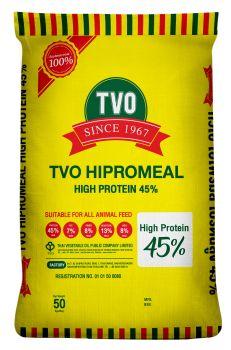
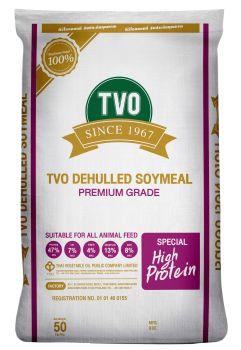
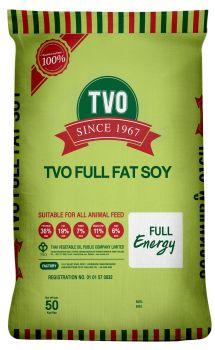
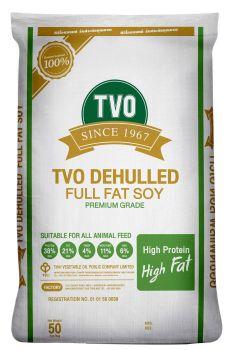
Animal feed ingredients: Soybean Meal, Dehulled Soybean Meal, Full Fat Soybean, Dehulled Full Fat Soybean and TVO soy-hulled are directly sold to feed meal manufacturer and livestock famer in domestic. The proportion of domestic and international sales is at 92 : 8
Cooking oil
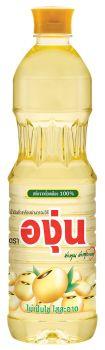
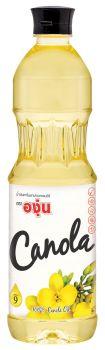
Brand “Angoon”, a vegetable oil for health-conscious consumers, is distributed locally by the Company through wholesalers, discount stores, supermarkets, hypermarkets, convenience stores, and retail shops with 58.46%* of market share. (*Source: NielsenIQ)
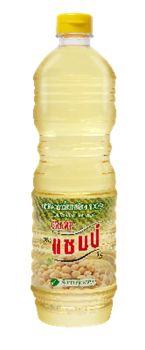
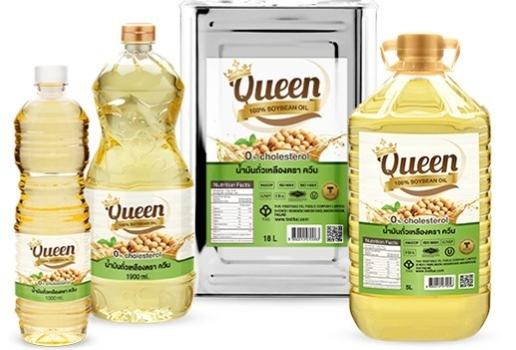
Brand “Healthy Chef” and “Queen”, export brands, are vegetable oils that consumers in the international market who are health-conscious choose. The Company has appointed an Exclusive Distributor in both Cambodia and Myanmarthrough the channel of Sub-distributor, Wholesaler, Supermarket, Hypermarket, Convenience Store and general retail stores in the market.
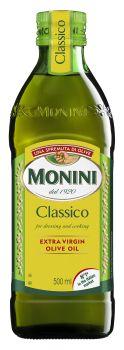
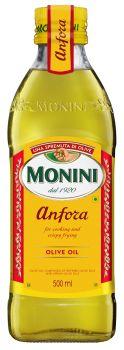
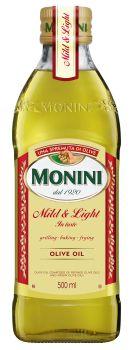
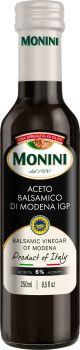
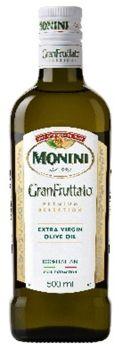
live Oil - Brand “Monini”, the Company is the only sale distributor in Thailand importing Extra Virgin Olive Oil (Brand Monini) which is number 1 bestselling brand from Italy. The Company has a marketing plan and distribution plan through all distribution channels for target group.
Industrial Oil : our customers are in significant industry such as canned tuna industry, food industry, painting industry and others. The Company sells directly to clients and dealers.
The Company emphasizes building good relationships with customers. Therefore, there is an annual customer satisfaction survey implemented to gauge the level of customer expectations and satisfaction, and gather feedback for future innovations. According to the results of the customer satisfaction survey in 2025, it was found that customers were overall satisfied at 92.82%, which demonstrated the Company's dedication to becoming a leader in sustainable superior product quality. Also, the Company manages relationships with customers at all levels to be able to offer new products or services that meet the needs of customers. As a result, the Company can offer customers maximum satisfaction and confidence in the Company's products and services.
Industry & Competition (Overall)
2025 Economic Situation and 2026 Outlook
1. Global Economic Situation and Outlook
The global economy is projected to expand at a slightly decelerated rate of approximately 3.3% in 2025. Concurrently, global inflation is expected to decline, returning to target ranges. This trend has prompted major central banks to gradually lower policy interest rates, creating a positive environment for financing costs and consumption. However, geopolitical risks remain a significant concern, particularly conflicts in the Middle East and Eastern Europe, which could adversely impact energy prices and global commodity transportation costs.
Looking ahead to 2026, the International Monetary Fund (IMF) forecasts continued global economic expansion at 3.3%. Nevertheless, emerging challenges regarding trade protectionist policies may intensify. The Company must monitor these developments closely, as they have the potential to disrupt global agricultural supply chains.
2. Thai Economic Situation
Thai economy is projected to decelerate in 2025, with growth moderating to approximately 2.4%. Key growth drivers include robust expansion in the export sector, specifically electronics and gold—alongside government impetus through accelerated budget disbursement and consumption stimulus measures such as "Khon La Khrueng Plus."
However, domestic demand remains fragile, reflected by headline inflation expected to remain near 0% and tight financial conditions affecting households and SMEs. Consequently, the Monetary Policy Committee (MPC) is anticipated to lower the policy interest rate to 1% within the first half of the year. This monetary easing aims to support the economy amidst political uncertainty and alleviate the debt burden on the private sector.
In 2026, the Thai economy is forecast to expand at a low rate of 1.5%. The economy faces significant external pressures, including trade wars and US tariff barriers that are expected to dampen the export sector, as well as intensified competition in the global tourism market.
Domestically, the economy continues to be constrained by high household debt and tight credit conditions. Although the MPC is expected to maintain an accommodative monetary policy with interest rates at 1.0%, political risk remains a critical barrier to the effective mobilization of public investment.
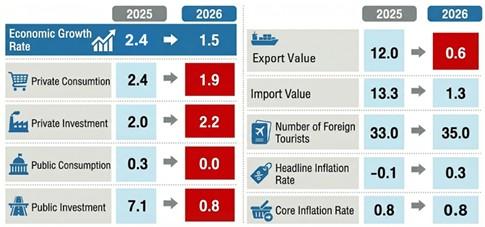
Figure 1: Thailand’s Economic Growth Rate (2024–2026)
Source: Bank of Thailand (January 2026)
Exchange Rates and Key Drivers of the Thai Baht
In 2025, the Thai Baht experienced significant volatility with a trend toward appreciation compared to the previous year, trading within a wide range of 31.00 – 34.50 THB per USD.
The primary driver of this movement was the depreciation of the US Dollar, resulting from the Federal Reserve’s (Fed) policy rate cuts. This monetary shift facilitated the redirection of capital flows back into emerging markets, including Thailand. Additionally, the currency was bolstered by profit-taking in the global gold market, where rising prices generated capital inflows. Consequently, during certain periods, these factors pressured the Baht to appreciate at a faster rate than the currencies of Thailand's trading partners and regional peers.
Beyond these external catalysts, Thailand’s strong external stability fundamentals served as a key support for the Baht. This was particularly evident in the distinct recovery of the current account surplus, driven by tourism revenues and robust export expansion.
Soybean and Soybean Product Market Situation in 2025
Soybean Prices
Soybean Prices In 2025, the average price of soybeans on the Chicago Board of Trade (CBOT) was $10.40 per bushel, a decline from the 2024 average of $11.00 per bushel (Figure 2). This price reduction was primarily driven by the impact of the US-China trade war, combined with global soybean inventories that are projected to reach record highs. Specifically, US ending stocks for the 2025/26 season are expected to hit their highest level in six years.
Production and Demand
United States Department of Agriculture (USDA) forecasts that global soybean production for the 2025/26 crop year will total 426 million tons, a decrease of 1.5 million tons (0.4%) compared to the previous year. Conversely, global soybean demand is projected at 423 million tons, an increase of 10 million tons (2.4%) year-on-year (Figure 3).
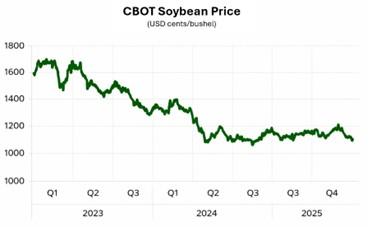
Figure 2: CBOT Soybean Price Movement (2023–2025)
Source: LSEG
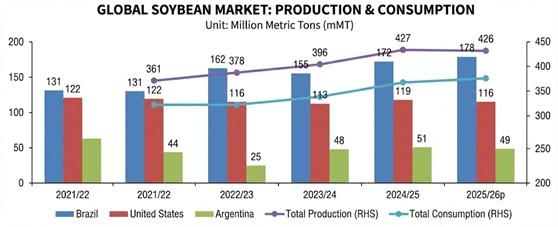
Figure 3: Global Soybean Supply and Demand (2021–2026)
Source: United States Department of Agriculture (USDA)
Soybean Product Prices
Soybean Meal: The average CBOT price for soybean meal in 2025 was $291 per short ton, a decrease from the 2024 average of $334 per short ton.
Soybean Oil: The average CBOT price for soybean oil in 2025 was 49.1 cents per pound, an increase from the 2024 average of 44.4 cents per pound. This price appreciation was driven by Biofuel Mandates in the US and Brazil, which have significantly expanded the demand for soybean oil in the production of Renewable Diesel.
Overview of the Livestock Industry in Thailand
Situation and Outlook of the Broiler Industry (2021 - 2026)
1. Global Broiler Market Situation
Production: Global production has grown at an average rate of 1.01% per annum. In 2025, production is projected to reach 105.8 million tons. The United States remains the top producer, followed by China and Brazil.
Consumption: Consumption has increased in line with production, with 2025 figures expected to reach 103.1 million tons. The primary consumer markets are the US and China.
Exports: Brazil retains its position as the world’s leading exporter (5.1 million tons), followed by the US, the European Union, and Thailand (ranked 4th). Notably, US exports are trending downward.
Imports: Japan is the largest importer, followed by Mexico and the United Kingdom.
2026 Outlook: Expansion is anticipated across all dimensions, including production, consumption, and international trade.
2. Thailand Broiler Market Situation
Production: Production has seen robust expansion, averaging 4.0% per annum (2025 forecast: 3.47 million tons), primarily driven by demand from foreign markets.
Exports: Exports have shown outstanding growth, averaging 7.0% per annum (2025 forecast: 1.20 million tons).
Frozen Chicken: Key markets include Japan, China, and Malaysia.
Processed Chicken: Key markets include Japan, the UK, and Europe.
2026 Outlook:
Production and exports are expected to expand slightly (Production +0.5%, Exports +1.2%).
Farm-gate prices and export prices are projected to adjust marginally higher.
3. Key Factors Impacting Thailand
Thai broiler industry has benefited from competitors facing disease outbreaks and declining animal feed raw material costs. Additionally, there are significant opportunities to expand into new markets in the Middle East.
However, the industry faces challenges regarding total production costs, specifically energy and labor which remain higher than those of competitors. Furthermore, operators must navigate stricter non-tariff trade barriers related to environmental standards (ESG) and currency volatility, which impact overall competitiveness.
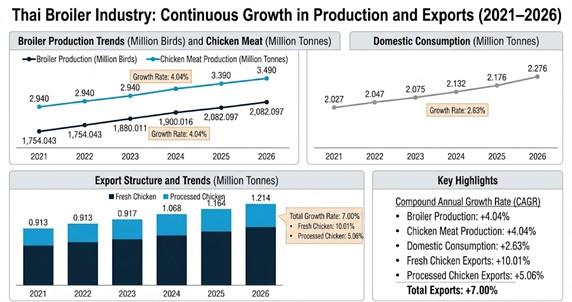
Figure 4: Production, Consumption, and Export Volumes of Thai Chicken Meat and Products
Source: Office of Agricultural Economics (December 2025)
Swine Industry Overview (2021–2025)
1. Global Swine Market Situation
Production: Global production has trended upward at an average rate of 1.73% per annum, with a projected increase of 0.2% in 2025.
Key Producers: China remains the top producer (though production is declining), followed by the European Union (declining), while the United States and Brazil are seeing production increases.
Consumption: Global consumption has grown by 1.7% per annum. Consumption is rising in the US and Russia, while declining in China and Europe.
Global Trade: Both export and import volumes are trending downward.
Key Exporters: United States (ranked 1st), Europe, and Brazil.
Key Importers: Mexico (increasing), Japan, and China.
2. Thailand Swine Market Situation
Overview: Thai swine industry is recovering from African Swine Fever (ASF), leading to higher production volumes and improved farm-gate prices in 2025.
Production: The sector is experiencing high growth, averaging +8.3% per annum. In 2025, production is expected to reach 23.6 million heads, driven by ASF recovery and enhanced biosecurity systems.
Consumption: Domestic consumption is trending upward at a rate of 9.4% per annum.
Exports:
Breeding and Live Swine: Experienced a surge in growth, with export values increasing by 109% and 42% respectively.
Chilled/Processed Pork: While export volumes have decreased, the value of chilled pork exports has increased. Key markets include Hong Kong and neighboring countries.
2026 Outlook
Global: Production and consumption are expected to remain stable, close to 2025 levels. China will remain the market leader, while the US will retain its status as the top exporter.
Thailand:
Production: Anticipated to increase slightly (+0.3%) due to improved breeder efficiency, though production costs remain high.
Market: Consumption and exports are expected to expand marginally, supported by confidence in product standards.
Price: Prices are projected to remain stable near 2025 levels, as pork is a price-controlled commodity.
3. Key Factors Impacting Thailand
African Swine Fever (ASF):utbreaks in Asia and Europe have caused volatility in global supply, creating an export opportunity for Thai producers.
Production Costs:Animal feed and energy costs remain elevated, impacting overall price competitiveness.
Government Policy:Economic stimulus measures and strict crackdowns on illegal pork imports are helping to support domestic prices.
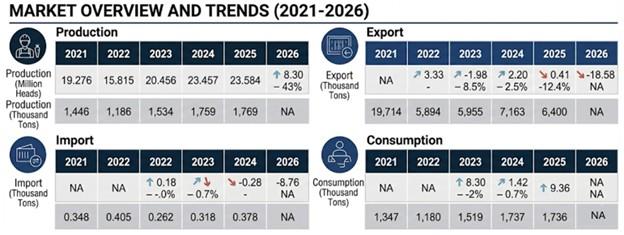
Figure 5: Production, Consumption, and Export Volumes of Thai Swine
Source: Office of Agricultural Economics (December 2025)
Global Vegetable Oil Industry Overview
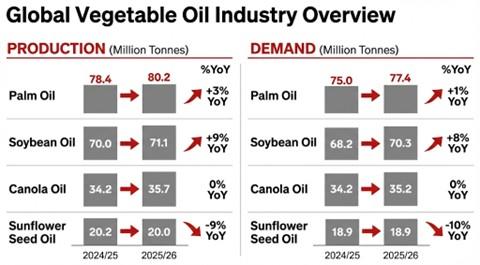
Figure 6: Global Vegetable Oil Supply and Demand
Source: United States Department of Agriculture (USDA)
Global Vegetable Oil Industry Overview Production and Demand Trends (2025/26)
Growth Drivers:Soybean oil leads the industry in terms of both production growth and consumption demand, followed by palm oil. Canola oil remains stable, while sunflower oil faces supply contraction.
Shifting Market Share:A distinct shift in market share is anticipated, with soybean oil projected to gain a larger share of the global market. Conversely, sunflower oil faces risks from reduced supply, which may exert upward pressure on prices and negatively impact its long-term competitiveness.
Overview of Thailand’s Soybean Crushing Industry
3.1 Raw Material Price Trends (Soybean and Soybean Meal)
2025: The global soybean market is characterized by a high supply surplus, driven by record-breaking production forecasts in Brazil and the United States. Consequently, global soybean prices have adjusted downward or stabilized at low levels. Furthermore, the US-China Trade War, intensified by President Donald Trump’s "Reciprocal Tariffs", has caused China (the world's largest buyer) to slow down and reduce imports from the US. This scenario acts as a positive factor for the Company’s crushing operations regarding raw material cost management.
2026: Prices are expected to remain volatile due to climatic patterns (La Nina/El Nino). However, high levels of global ending stocks will serve as a buffer, limiting the severity of any potential price spikes.
3.2 Livestock Sector Trends (Downstream Demand)
The Thai swine and broiler sectors are recovering from a period of depressed prices and disease outbreaks over the past 2–3 years. Reduced animal rearing costs, driven by lower feed ingredient prices, have incentivized farmers to expand production. This expansion directly fuels continuous growth in demand for soybean meal. The Thai soybean crushing industry is growing in tandem with the animal feed sector, supported by:
Broilers: Export volume expanded by 6% YoY, driven by trading partner confidence in Thailand’s Compartmentalization, Traceability, and strict disease control measures.
Swine: Production increased by 8% YoY due to recovery from African Swine Fever (ASF). The subsequent increase in breeder stock and total herd population has driven continuous demand for feed raw materials, specifically Soybean Meal and Full-Fat Soy.
3.3 Biofuel Policy The government has adjusted its energy policy regarding high-speed diesel by canceling B10 and retaining only B5 and B20 to manage Crude Palm Oil (CPO) stocks. While this limits the explosive growth of vegetable oil usage in the energy sector, it fosters greater price stability and secures raw material supply for the edible oil consumption market.
Strategic Direction and Operational Outlook for 2026
Amidst the industrial challenges of 2026, including volatility in raw material prices, product pricing, and foreign exchange rates, the Company has established a strategic management foundation to transform challenges into business opportunities through 4 Key Pillars:
Proactive Risk Management:Closely monitoring economic situations and elevating internal controls across all sectors to minimize the impact of external factors.
Innovation & Strategic Marketing:Adopting flexible marketing plans tailored to changing situations while accelerating the development of High Value-Added (HVA) innovative products to meet evolving market needs.
Maintaining Excellence Standards:Reinforcing core strengths in product quality and freshness, which are central to sustaining long-term customer confidence and trust.
Sustainable Growth:Focusing on Agility in operations to generate new market opportunities and maintain industry leadership.
With a clear vision and comprehensive preparedness, the Company is confident in its ability to navigate these changes and deliver stable, sustainable long-term growth.
Competitive Landscape Thailand’s Vegetable Oil Market
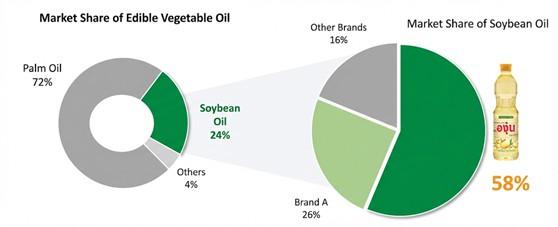
Figure 7: Thailand’s Edible Vegetable Oil Market Share (2025)
Source: NielsenIQ
Domestic Edible Oil Market Share
In the past year, the market share of edible palm oil declined to 72%, while the market share of edible soybean oil increased to 24% (Figure 7). This shift was driven by the continuous rise in domestic palm oil prices starting in Q4/2024, which narrowed the price differential between the two oil types, effectively benefitting the soybean oil segment.
Within the domestic edible soybean oil market, the "Angoon" brand remains the undisputed market leader, commanding over 50% of the total market share. This dominance reflects strong brand equity, high consumer confidence, and an extensive distribution network, solidifying its status as the Top-of-Mind brand in this category.
Competitive Landscape of the Soybean Meal Market in Thailand
Role and Importance of Soybean Meal
Soybean meal is a co-product of the soybean oil extraction process and serves as a high-quality protein source essential for animal feed formulations. Substitutes for soybean meal are limited due to inconsistent seasonal availability and generally higher price points, ensuring soybean meal remains a critical raw material for the feed industry.
2025 Market Overview
In 2025, total demand for soybean meal in Thailand stood at approximately 5.11 million tons. With domestic production capacity at 2.4 million tons per annum, Thailand relied on imports totaling 3.2 million tons to meet the deficit.
2026 Market Outlook
For 2026, total demand is projected to rise to approximately 5.28 million tons. Domestic production capacity is expected to increase to 2.6 million tons per annum, resulting in an import requirement of approximately 2.9 million tons.
Growth Drivers The expansion in soybean meal demand is supported by three key factors:
Farm Management Standards:The implementation of standardized livestock farm management and effective disease control systems.
Export Demand:Rising demand from export markets necessitating high-efficiency farming standards.
Economic Recovery:The rebound of Thailand's service and tourism sectors boosting domestic meat consumption.
Driven by these factors, the Thai soybean meal industry is poised for continued expansion in both domestic production and imports, aligning with the growth of the animal feed industry and the livestock sector. (Data Source: Thai Feed Mill Association)
Sources of Information
Bank of Thailand (BOT)
Office of Agricultural Economics (OAE)
The Customs Department
Department of Internal Trade (DIT)
Thai Feed Mill Association
NielsenIQ
United States Department of Agriculture (USDA)
International Monetary Fund (IMF)
Refinitiv (LSEG)
Research Department, Thai Vegetable Oil Public Company Limited (TVO)
Procurement of Products & Services
Introduction
Thai Vegetable Oil Public Company Limited has a total production capacity of 7,000 tons per day with more than 80 percent capacity utilization.
Production Policy : Made-to-Order in according to current market situation and trends.
Detail of factories and headquarter as follows;
Head Office 149 Ratchadapisek Road, (Thapra-Taksin) Bukkhalow Thonburi Bangkok 10600
Factory TVO1 101/2 Moo 1, Khunkaew Sub-District, Nakhonchaisi District, Nakhonpathom Province 73120
Factory TVO2 36 Moo 3, Nakhonchaisi District, Nakhonpathom Province 73120
Factory TVO3 81/7, 81/8, 82 Moo 1, Thaiyawas Sub-District, Nakhonchaisi District, Nakhonpathom Province 73120
Factory OP3 89 Moo 1, Thaiyawas Sub-District, Nakhonchaisi District, Nakhonpathom Province 73120
Reporting Mode
3117
Procurement (Overall)
The company’s core production process is divided into three key stages: the Oil Extraction Process, the Oil Refinery Process, and the Full Fat Soy Production Process.
Stage 1: Oil Extraction Process
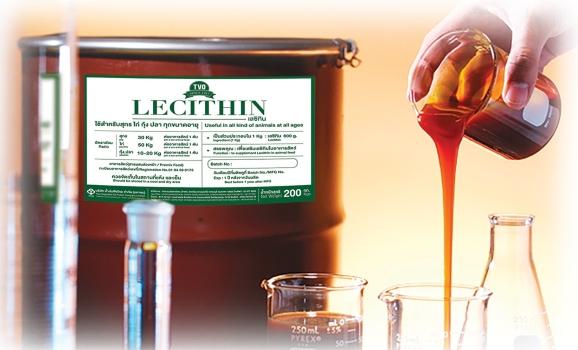
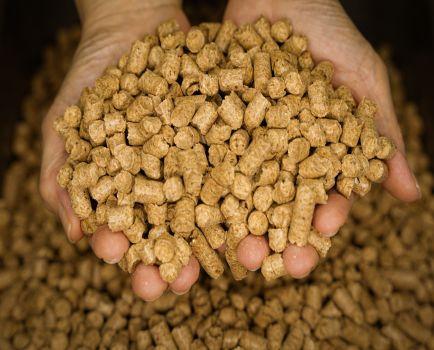
The Oil Extraction Process begins with soybeans undergoing cleaning and raw material preparation before entering the oil extraction stage. This process involves the cooking process (toasting), moisture evaporation, and the cooling process, respectively. The primary outputs from this stage include crude soybean oil, soybean meal, and de-hulled soybean meal. Additionally, lecithin is obtained through the degumming process (separation of gums or crude fats) during crude oil processing. Soybean hulls, which are ground or cooked, are also produced as a finished product from this stage.
The products from the extraction plant—namely soybean meal, soybean hulls, and lecithin—are rich in nutritional value and are highly suitable as raw materials for producing high-quality animal feed as follows:
Stage 2: Oil Refinery Process
The Oil Refinery Process utilizes crude soybean oil from the extraction plant as its starting material. The first step is the removal of phosphorus and free fatty acids through the Nano Neutralization, Washing, and Drying (NWD) process. This is followed by oil bleaching to remove pigments and concludes with oil deodorization. The result is high-quality refined soybean oil, along with by-products such as Acid Oil and Distillated Oil.
The refined soybean oil produced is distributed under leading domestic and international brands:
Stage 3: Full Fat Soy Production Process
Beyond extraction and refining, the company processes soybeans into Full Fat Soy. This product retains the complete fat content and is specifically designed to preserve the full nutritional integrity of the soybeans.
Through complex and highly efficient production processes, coupled with strict quality control at every stage, TVO remains committed to ensuring that every product meets the highest standards of quality and safety for consumers.
Raw Material Acquisition (Overall)
Soybean is our major raw material. The Company shall buy domestic soybeans as first priority. However, due to the inadequate supply of domestic soybean, the Company must therefore import more than 90% of total soybean from Brazil and the United State of America, which import price of soybean depends on soybean price in the world market with an exemption from import duty on soybean import policy according to the agreement of World Trade Organization (WTO). For the purchase of domestic soybeans, the Company shall buy domestic soybeans from famers and traders. The major plantations are around Sukothai, Kampaengpetcn, Autaradit, Petchaboon, Chiangmai and Khonkaen etc. In addition, the Company also complies with government policy that stipulates the conditions for soybean importers to buy all domestic soybeans in proportion to the amount of imports among all importers at price and conditions specified in the contract determined by Committee on Oil Crops and Vegetable Oils. Moreover, the Company also supported a new soybean planting experimental project in various species of soybean to achieve higher productivity that would make the farmers more profit and encourage them to grow more soybeans.
The World average soybean production over the past ten years tended to increase according to the demand of soybean consumptions. Soybean is a commodity product which is widely traded over the world market and can be easily provided and has never suffered from shortage of soybeans until unable to buy soybeans but there might be some periods when soybean price went higher than normal according to demand and supply of the World market in that year. The trade war between the United States of America and China are still key factor that have both positive and negative impacts on the World soybean prices continuously. However, the Company has closely always monitored the soybean price situation to take advantage of the opportunities to purchase soybeans at a competitive cost and to obtain good quality soybeans.
In general, the Company shall purchase soybeans approximately 3-4 months in advance according to sales and production plan by making forward contracts with various suppliers and agree to purchase from supplier offering the best condition to avoid risk of managements and delivery of raw material. The Company does not have a policy or obligation to buy from specified supplier. In addition, the price of soybean traded in the World market is in US dollars, in order to avoid risk of exchange rate, the Company therefore has a policy to make forward contract to manage the cost of raw materials in Thai Baht to be most effective.
Production Policy (Overall)
Made-to-Order in according to current market situation and trends.
Production Capacity (Overall)
| Item | Unit | Unit (if Other) | Used | Capacity |
|---|---|---|---|---|
| Total production capacity | Others | tons per day | 80 | 7,000 |
Domestic/Overseas Purchase Proportion (Overall)
| Raw Material | Source Country | Value |
|---|---|---|
| soybean | Brazil | 21,942,287,414.75 |
| soybean | Thailand | 45,768,390.25 |
| soybean | Cambodia | 38,241,611 |
Projects Under Construction
Has Projects Under Construction (Y/N)
No
Debentures & Bills of Exchange
Has Debentures (Y/N)
No
Convertible Securities
Has Convertible Securities (Y/N)
No